
Microsoft Agentic AI system
Designing an AI Operating Layer for Enterprise Decision-Making
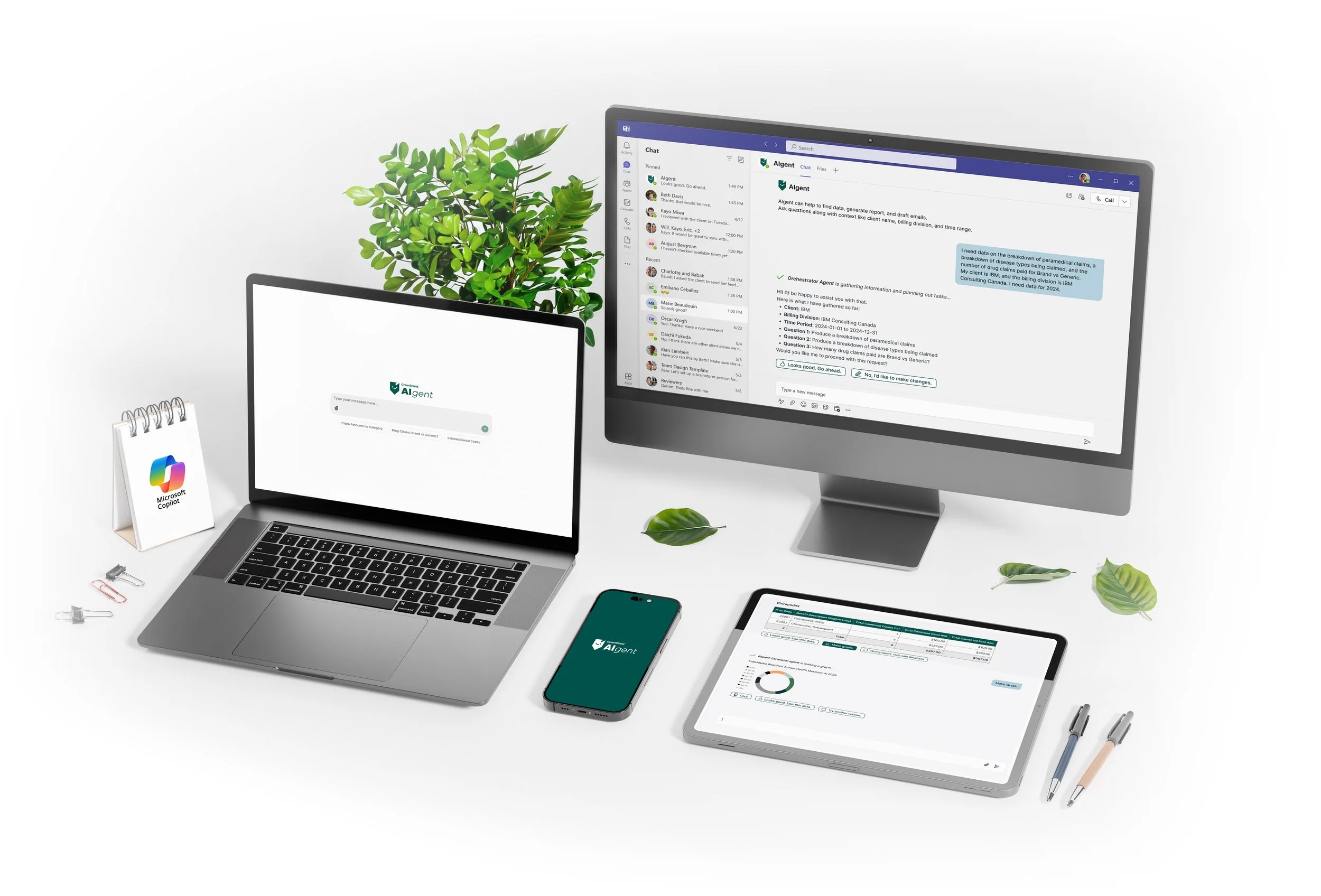
Agentic AI system that replaces fragmented BI workflows with real-time, natural language-driven insights across enterprise data.
The Role.
Lead UX Designer / Conversation Designer
-
AI Product Design / Agentic System Design / Conversational UX / User Research / Persona Development / Journey Mapping / Workshop Facilitation / Design Sprints / Prompt-driven UX / Human-in-the-loop Design / System Thinking / Enterprise UX / Prototyping / Visual Design / Icon Design / Accessibility (WCAG)
-
The Clients.
Microsoft, GreenShield


Featured.
🥇 1st Place in Canada — Microsoft Agentic AI Hackathon
🌍 Top 12 Global Finalist
Benefits Canada Article: GreenShield is Canadian Winner at Microsoft’s Global AI Hackathon
“UX Designer” →
“Complex system transformation을 experience로 풀어내는 Strategic Product Designer”
Overview.
Most enterprise data systems are technically powerful, but operationally broken.
At Microsoft Agentic AI Apps Hackathon 2025, led the design of an AI-native interface that removes the need for BI tools entirely.
Instead of navigating fragmented systems, users interact with data through autonomous agents that understand, retrieve, and respond end-to-end.
This project wasn’t about improving a workflow.
It was about replacing it.
Co-Design Method.
We inegrated GreenShield stakeholders throughout the design process to collaboratively design the solution
The Reality.
Customer Service Representatives weren’t lacking tools.
They were drowning in them.
~200+
requests per day
2–3 hours
spent searching reports
Poor naming, duplication, inconsistency
Escalations taking
up to 10 days
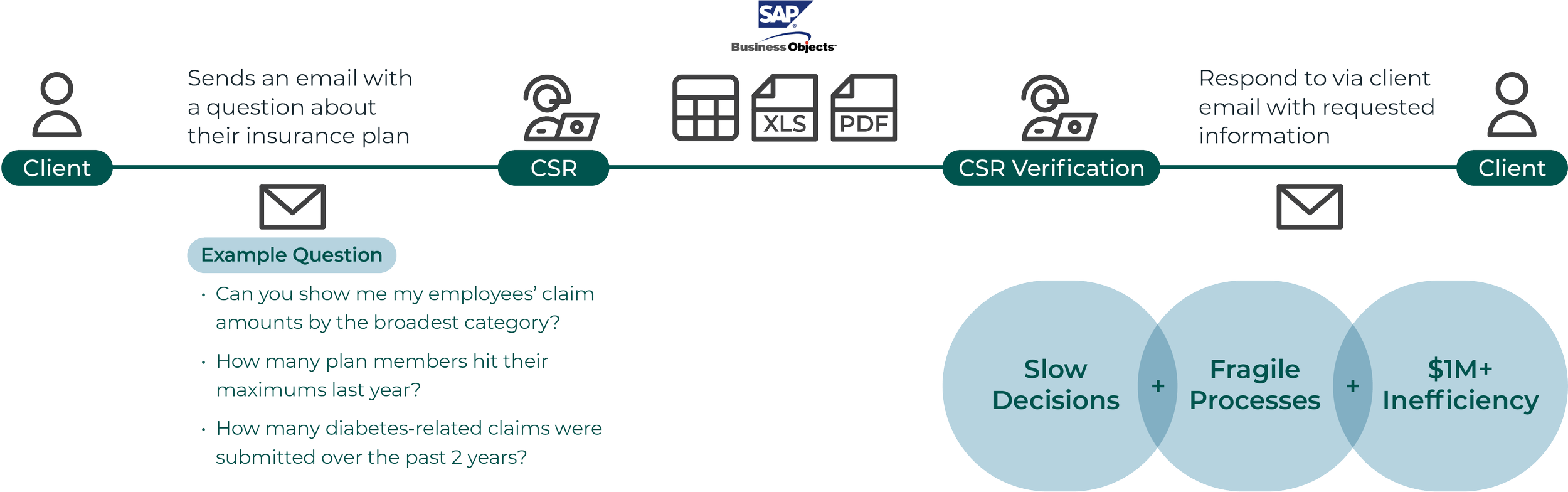
The system required expertise just to function.
Enterprise teams rely on fragmented BI systems, requiring manual report generation and data interpretation.
This creates latency in decision-making and limits accessibility for non-technical users.
What We Built.
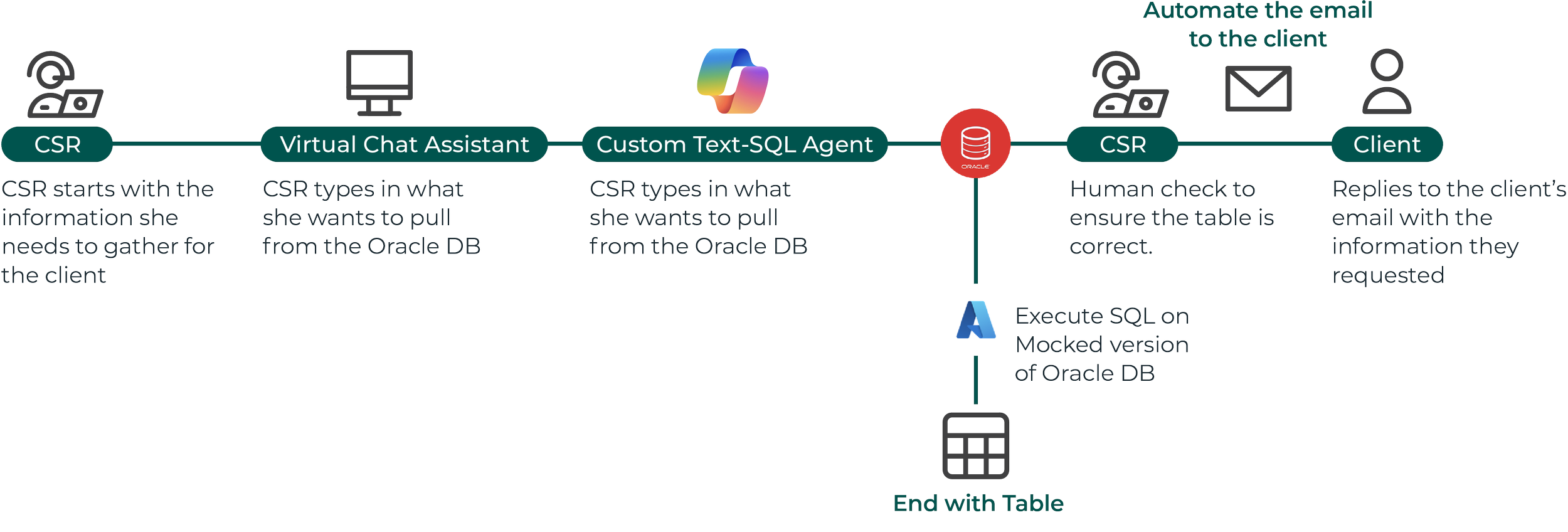
A fully agentic AI system that turns a question into an answer without exposing the system behind it.
User asks:
“Show employee claim amounts by category”
System executes:
Interprets intent
Generates SQL
Queries enterprise database
Returns structured output
Drafts client-ready email
Allows human validation
No BI tools
No report hunting
No manual formatting
Just decision-ready output in minutes
My Role.
Owned the design of an AI-first interaction model within a cross-functional team.
Defined how users interact with autonomous systems
Designed trust mechanisms (confirmation, transparency, validation)
Translated agent architecture into usable workflows
Reduced multi-step processes into a single interaction loop
Applied accessibility standards (WCAG / AODA) within AI UI
This wasn’t about screens.
It was about designing system behavior.
A multi-agent AI system embedded into enterprise workflows that:
Interprets natural language queries
Retrieves and synthesizes enterprise data
Generates actionable insights in real-time
The Design Principles.
Keep humans in control.
Automation without control breaks trust.
Human-in-the-loop validation.
AI should explain itself.
Users don’t trust black boxes.
System confirms, updates, and validates in real time.
Remove operational friction
Navigation is not a feature.
Eliminated entire toolchains.
Design for outcomes, not actions.
Users don’t want reports.
They want answers.
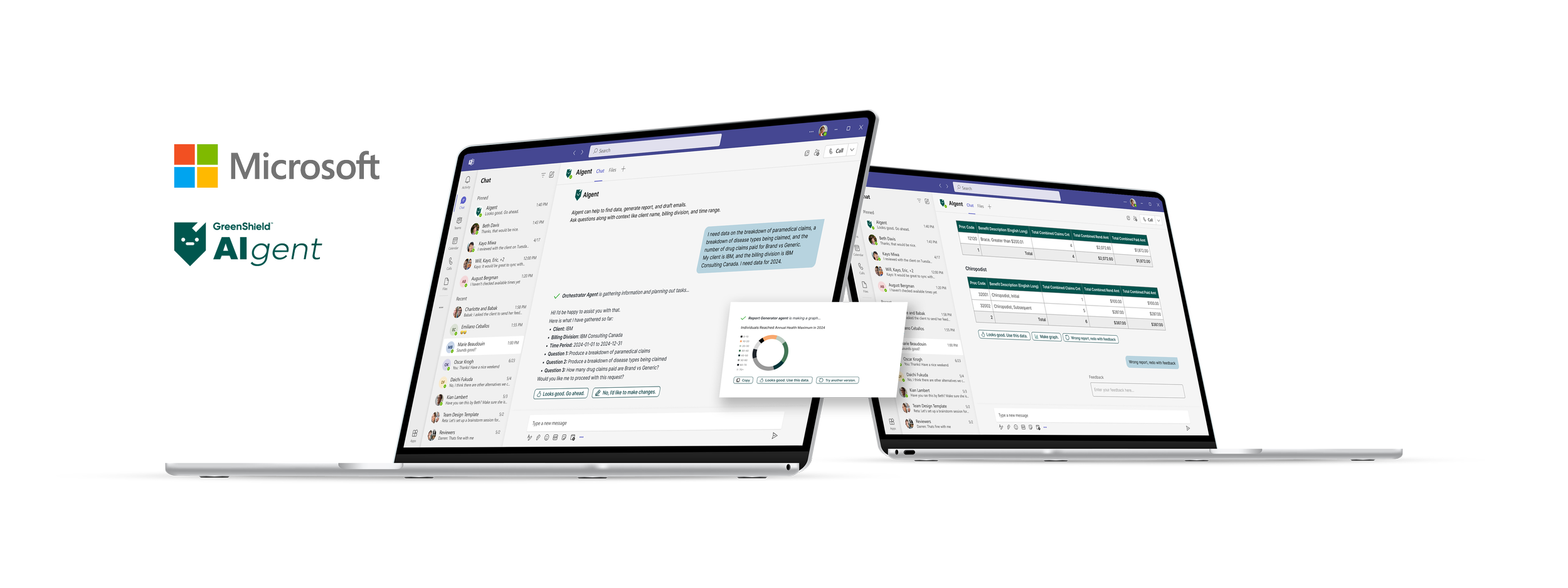
The System Thinking.
Multi-agent orchestration (AutoGen)
Text-to-SQL pipeline
Oracle DB integration
Human validation layer
Output generation (table / chart / email)
Designed to scale into:
Microsoft Teams
Enterprise BI systems
Knowledge retrieval layers
The Impact.
Reporting time
Hours → Minutes
Annual savings
$200K+
ROI
41%
Shifted data access
Specialists → Everyone
The biggest impact came not from adding features, but from removing entire workflows.
AI shifted the design challenge from optimizing tasks to eliminating them.
Why This Matters.
This project signals a shift:
From.
dashboards
reports
manual workflows
To.
autonomous systems
conversational interfaces
real-time decision layers
This is what AI-native enterprise software looks like.
Most companies are adding AI to existing systems.
This project does the opposite.
It removes the system entirely and replaces it with intelligence.
The Learning.
Designing for AI is less about interface and more about defining agent behavior, boundaries, and trust.
Users don’t interact with screens — they interact with decisions.
In AI systems, usability depends on explainability and confidence signaling, not just visual clarity.
Designing how AI explains itself became as critical as the output itself.
The biggest impact came not from adding features, but from removing entire workflows.
AI shifted the design challenge from optimizing tasks to eliminating them.